Gateway-centric
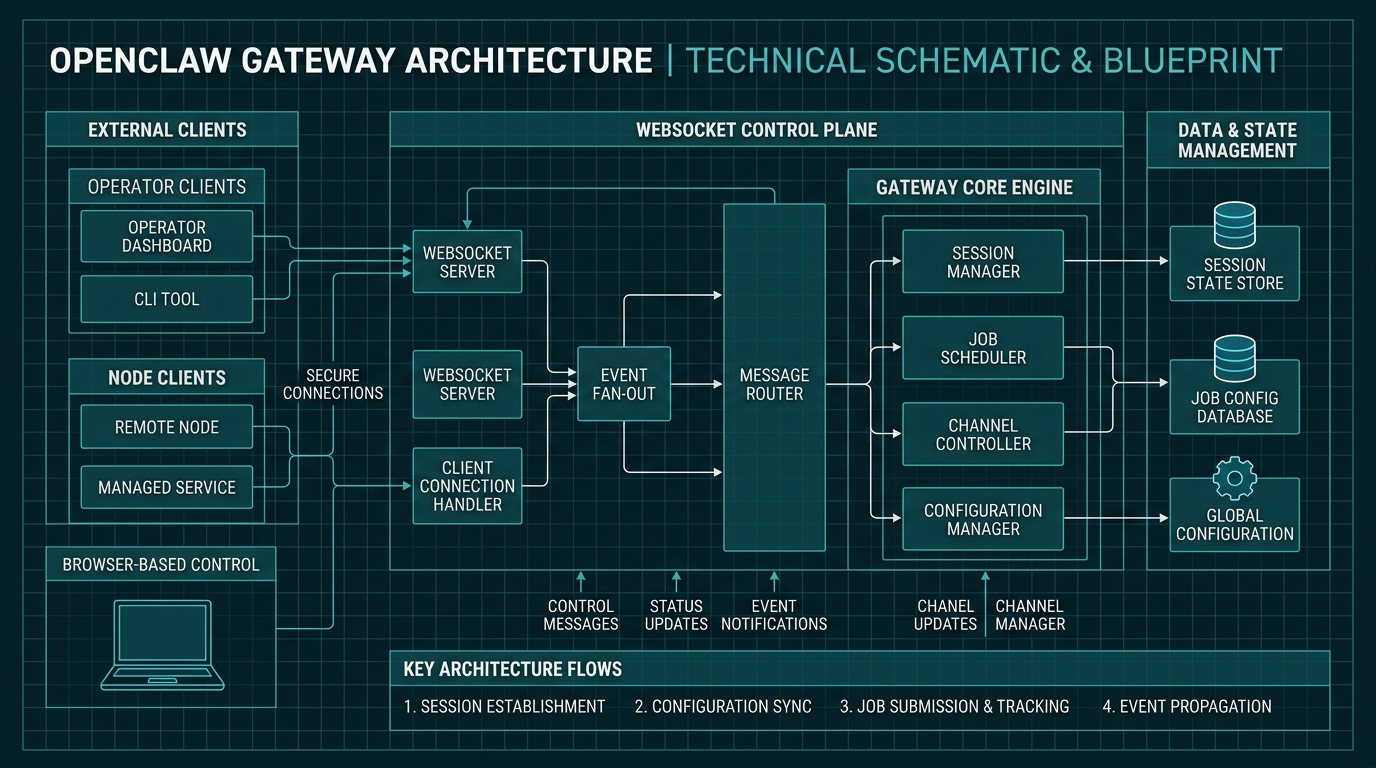
The Gateway is the real center: protocol termination, sessions, config, jobs, browser routing, node mediation, and channel integration all live there.
OpenClaw is not just a chat wrapper around an LLM. It is a gateway-shaped assistant runtime that treats routing, sessions, tools, browser control, mobile nodes, memory, and trust boundaries as first-class architecture.
State, routing, auth, jobs, browser, nodes, sessions, config.
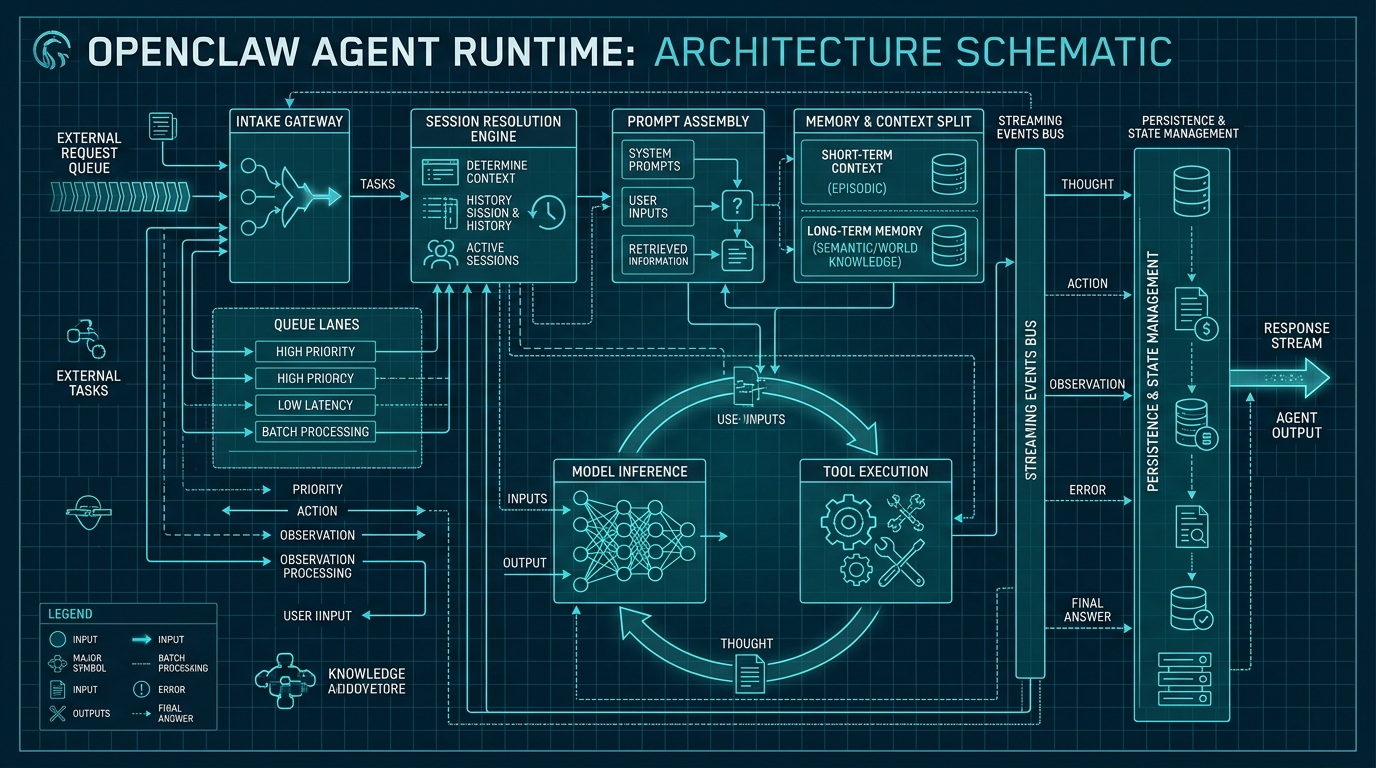
Pi-based turn loop with queues, skills, tools, compaction, memory.
Typed capabilities with policy, approvals, and remote execution surfaces.
Session-first persistence plus retrieval-augmented long-term memory.
The cleanest shorthand from the Oracle analysis is brutally useful:
Once you see OpenClaw that way, the whole product stops looking like a pile of clever hacks. One always-on Gateway owns truth. Agents are swappable brains. Sessions are first-class state containers. Tools and nodes are mediated capabilities, not random shell calls. The architecture is opinionated on purpose.
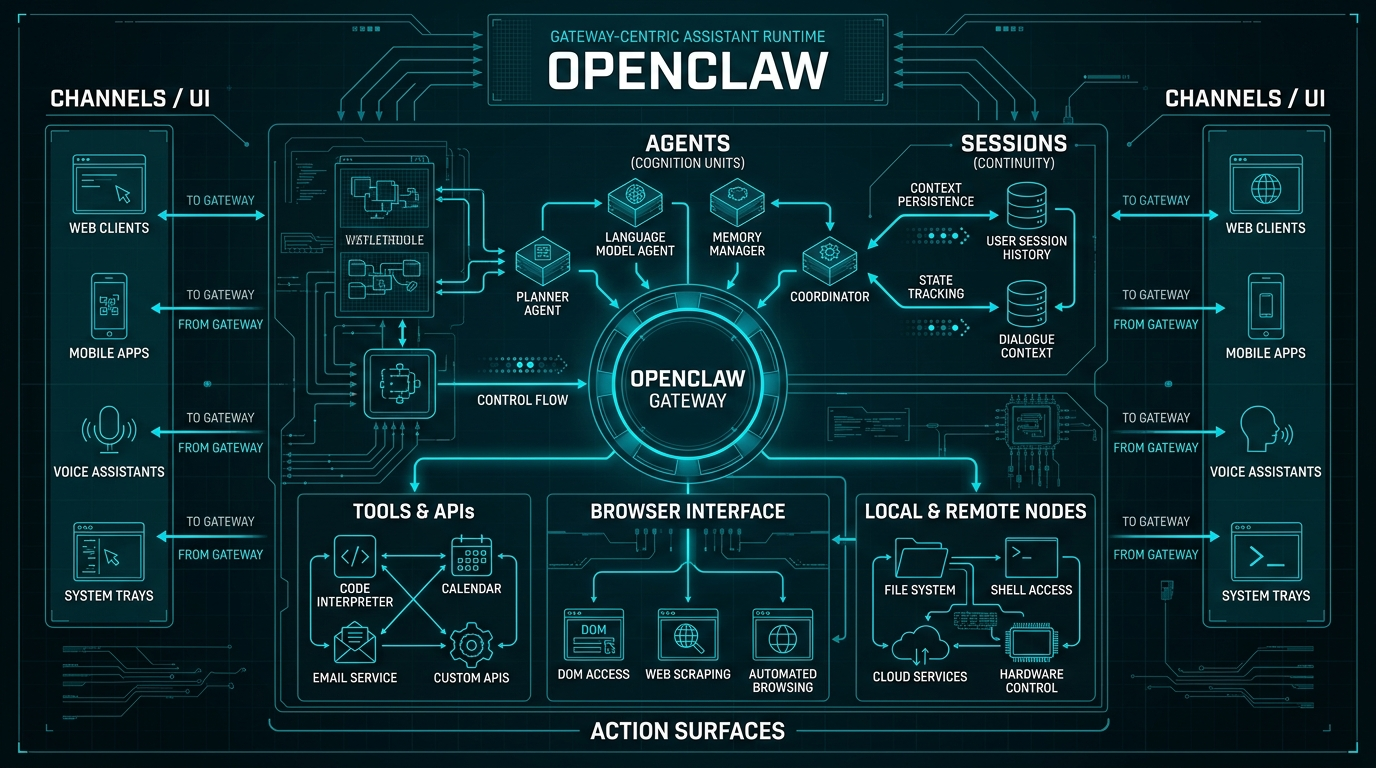
The Gateway is the real center: protocol termination, sessions, config, jobs, browser routing, node mediation, and channel integration all live there.
Agent turns are queued and serialized by session so continuity is protected by scheduler policy instead of luck.
Nodes extend the assistant across phones and machines without bypassing the control plane.
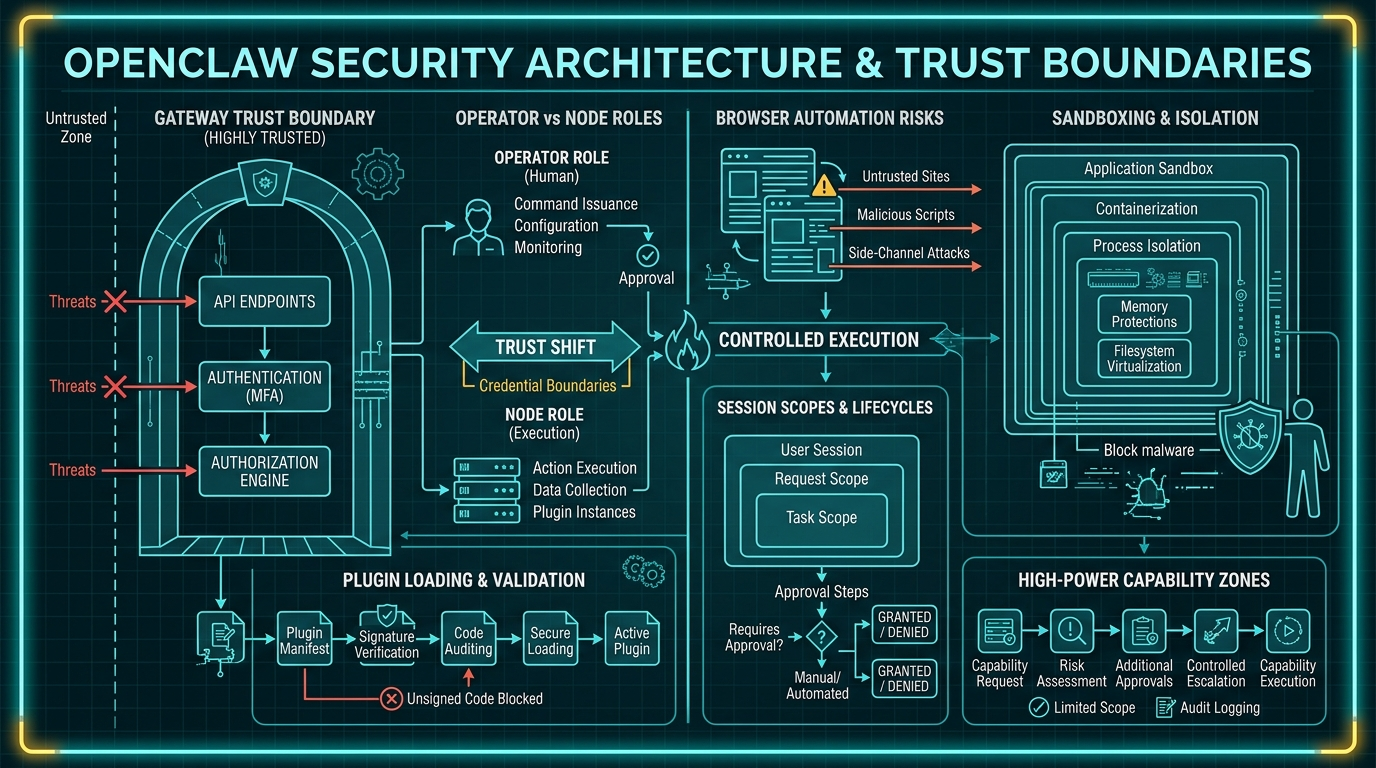
OpenClaw is honest about risk: browser eval, plugin loading, node execution, and open multi-user access are dangerous surfaces.
This is the condensed version. The full chaptered write-up covers 20 sections including the Gateway protocol, agent loop, multi-agent routing, sessions, memory, tools, nodes, browser/canvas automation, cron/jobs, config, and the platform’s strongest tradeoffs.
Coherence. OpenClaw feels like an assistant operating system, not a prompt wrapper with accessories bolted on later.
Centralization. The Gateway is both the magic and the blast radius.
More formal capability slots, stronger plugin structure, and deeper unification around the Gateway protocol.