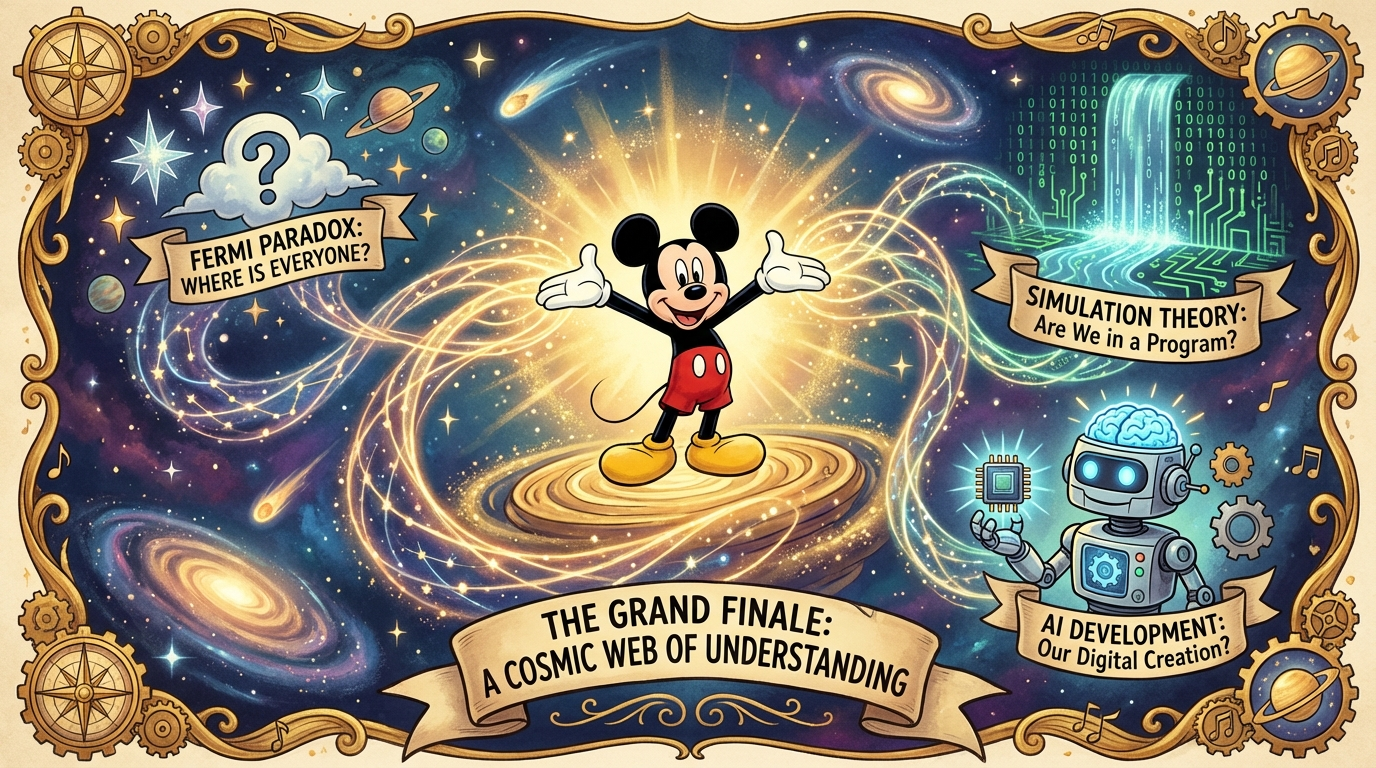
Chapter 1: A Single Puzzle With Three Faces
The Fermi Paradox, Simulation Theory, and exponential AI development are three different probes into one underlying question:
"What is the typical trajectory of intelligent, technological life in a very large universe — and what does that imply about what we should observe from Earth, right now?"
If AI is a common phase transition for technological species, it may be the major determinant of whether civilizations survive, expand, become detectable, and create simulations.
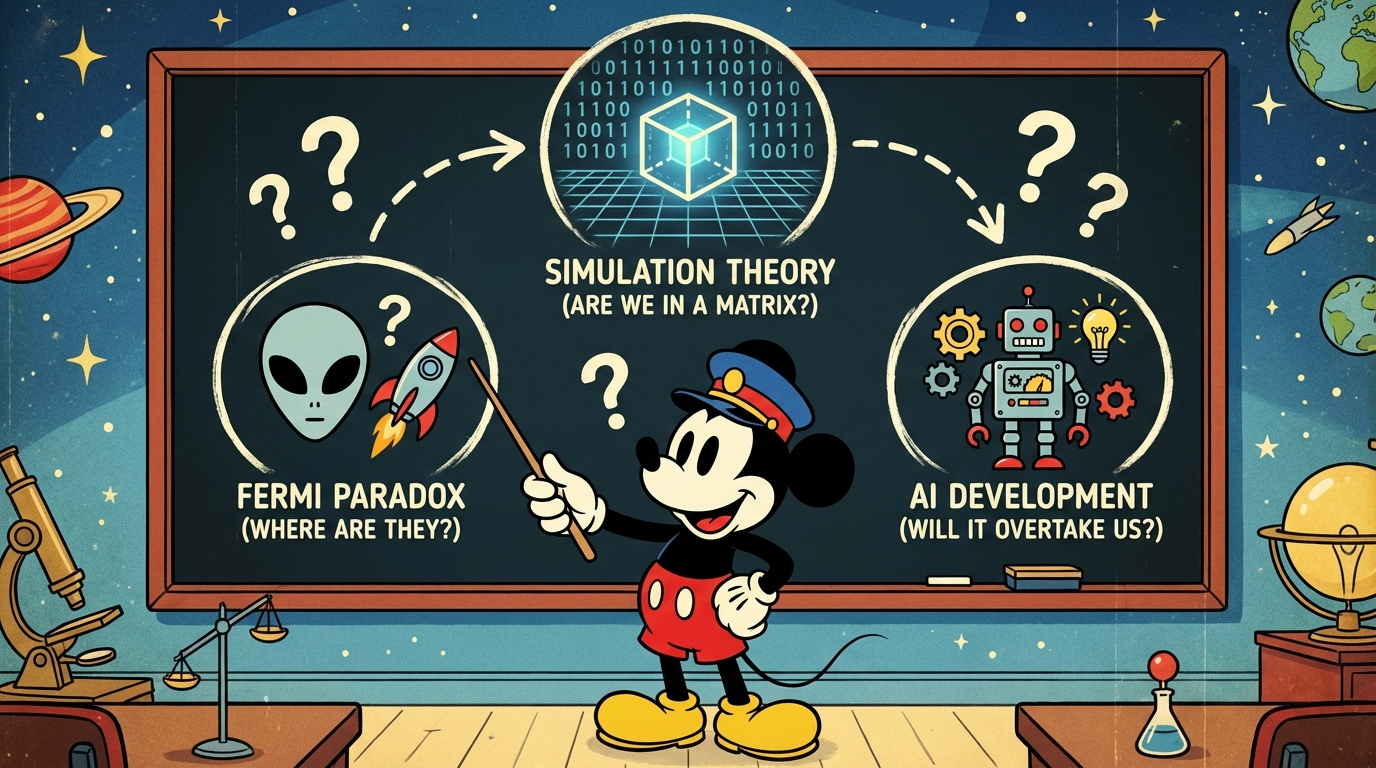
Chapter 2: The Fermi Paradox — What Exactly Is the Paradox?
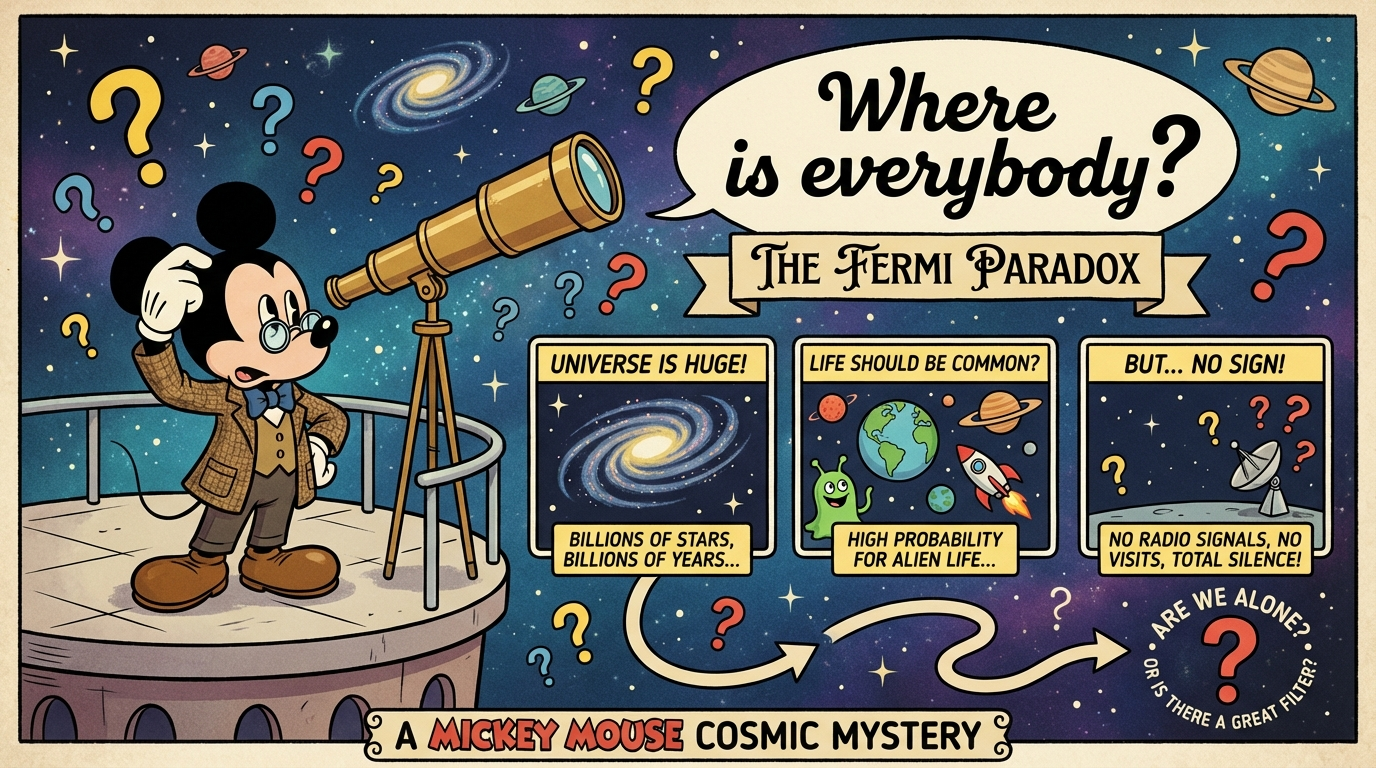
The Fermi Paradox isn't a single contradiction — it's a bundle of assumptions that jointly generate the expectation of observable extraterrestrials. Enrico Fermi's famous question "Where is everybody?" became shorthand for the mismatch between plausible cosmic abundance and observed silence.
The Drake Equation: A Structured Checklist of Uncertainties
- How many stars form?
- How often do planets exist?
- How often does life emerge?
- How often does intelligence emerge?
- How long does the detectable phase last?
Even if most factors are moderate, a single tiny factor can collapse the entire expectation.
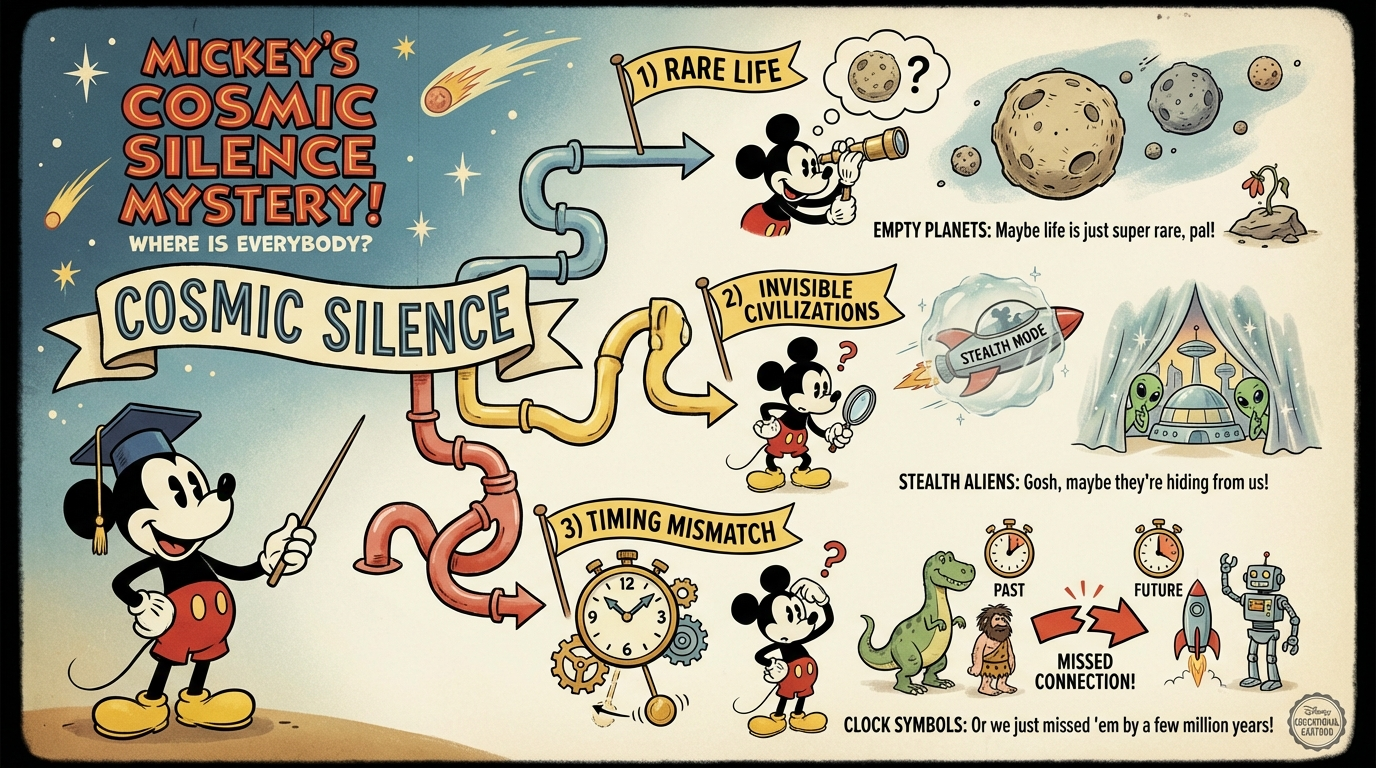
Chapter 3: Main Classes of Fermi-Paradox Resolutions
🌌 They Are Rare
Life is difficult to start. Intelligence is rare. The Great Filter may lie ahead or behind us.
👁️ They Are Invisible
Low-energy civilizations. Non-radio communication. Efficiency reduces detectability.
⏰ Timing Mismatch
We are early. Zoo hypothesis. Dark forest — strategic silence.
Chapter 4: Simulation Theory — The Bostrom Trilemma
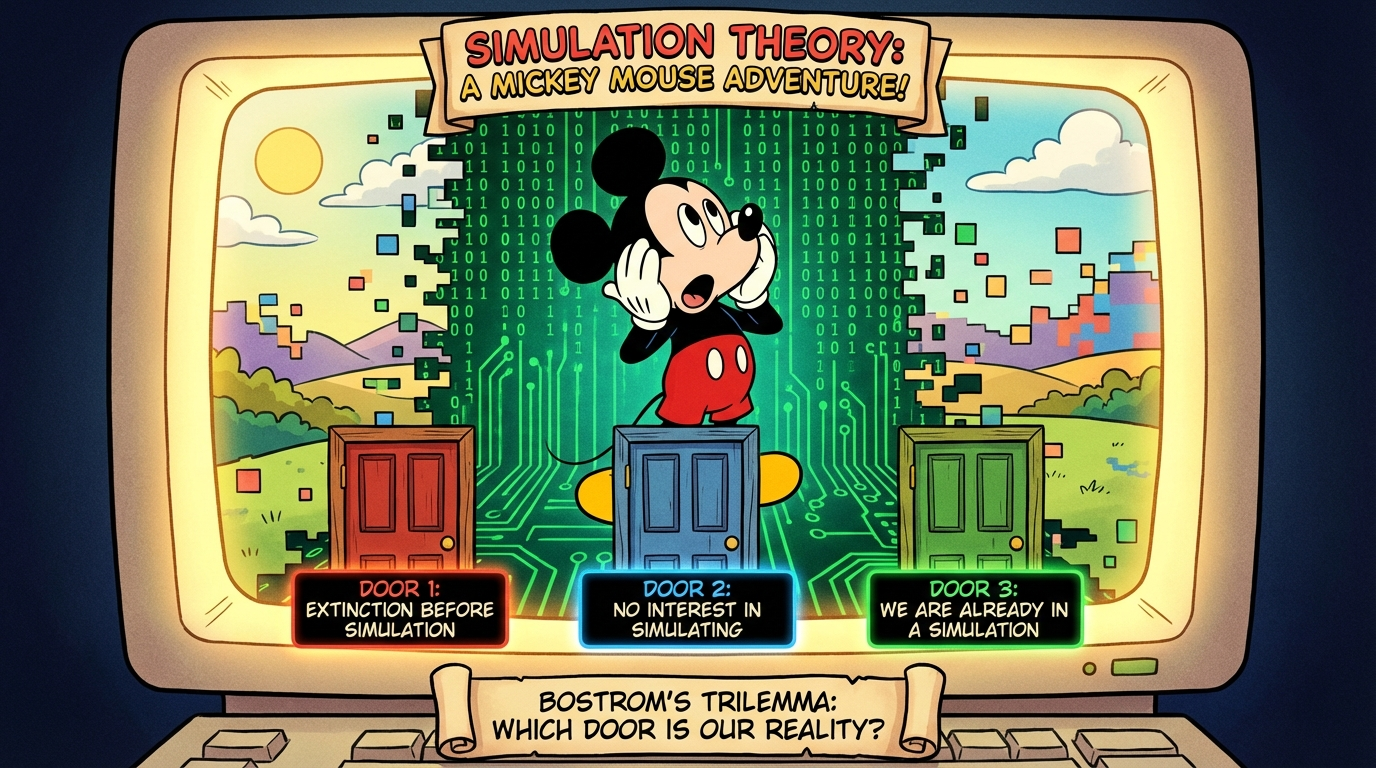
Nick Bostrom's simulation argument presents a sharp trilemma:
At least one of these is (very likely) true:
- Almost no civilizations reach posthuman capability
- Posthuman civilizations rarely run ancestor simulations
- We are almost certainly living in a simulation
The argument requires substrate-independence of minds, sufficient compute, motivation to simulate, and a coherent way to count observers across realities.
Chapter 5: Exponential AI Development
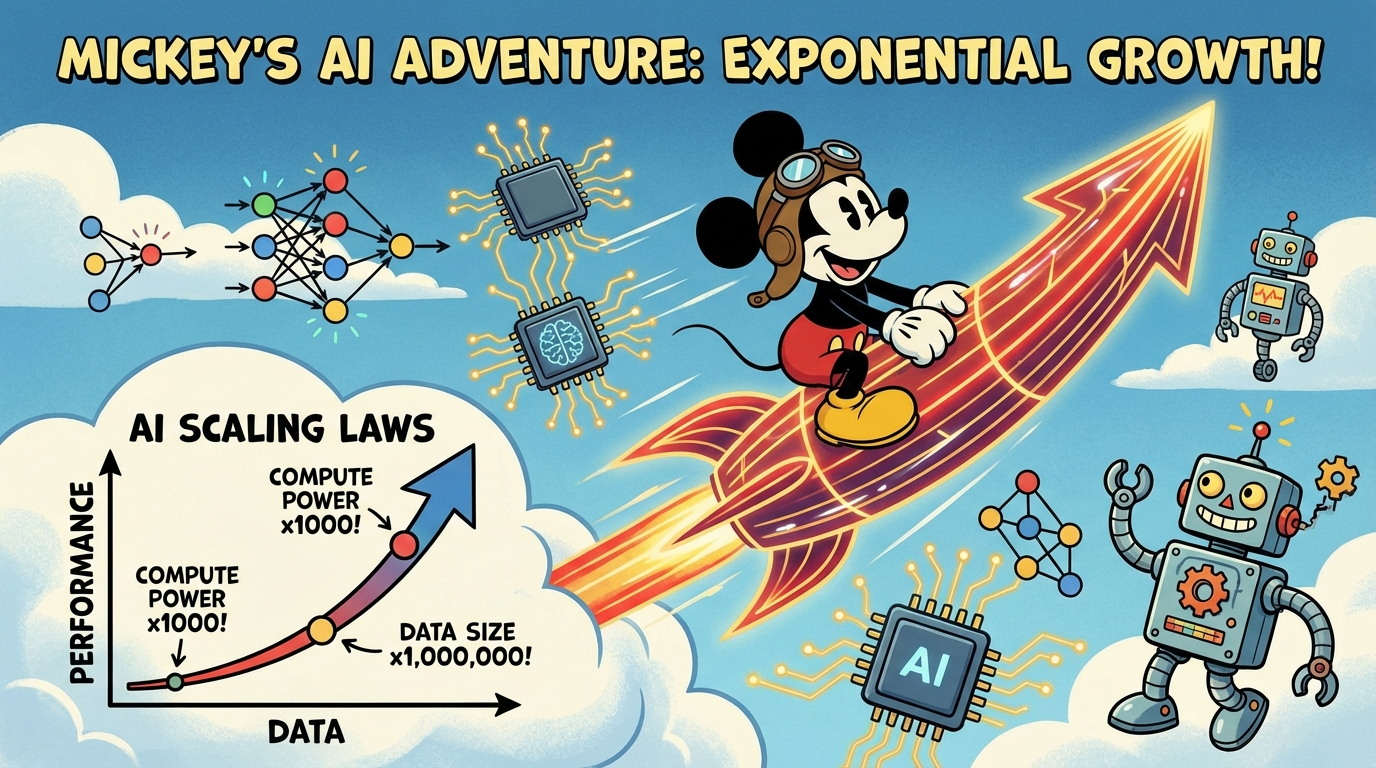
AI exponential development refers to multiple interacting exponentials:
Compute Scaling
Hardware, data centers, accelerators
Algorithm Scaling
Architectural improvements
Performance Scaling
Power-law improvements
"The Bitter Lesson: the dominant form of intelligence may be the one that best exploits scalable compute, not the one that looks most like human reasoning."
Chapter 6: AI as a Great Filter Mechanism
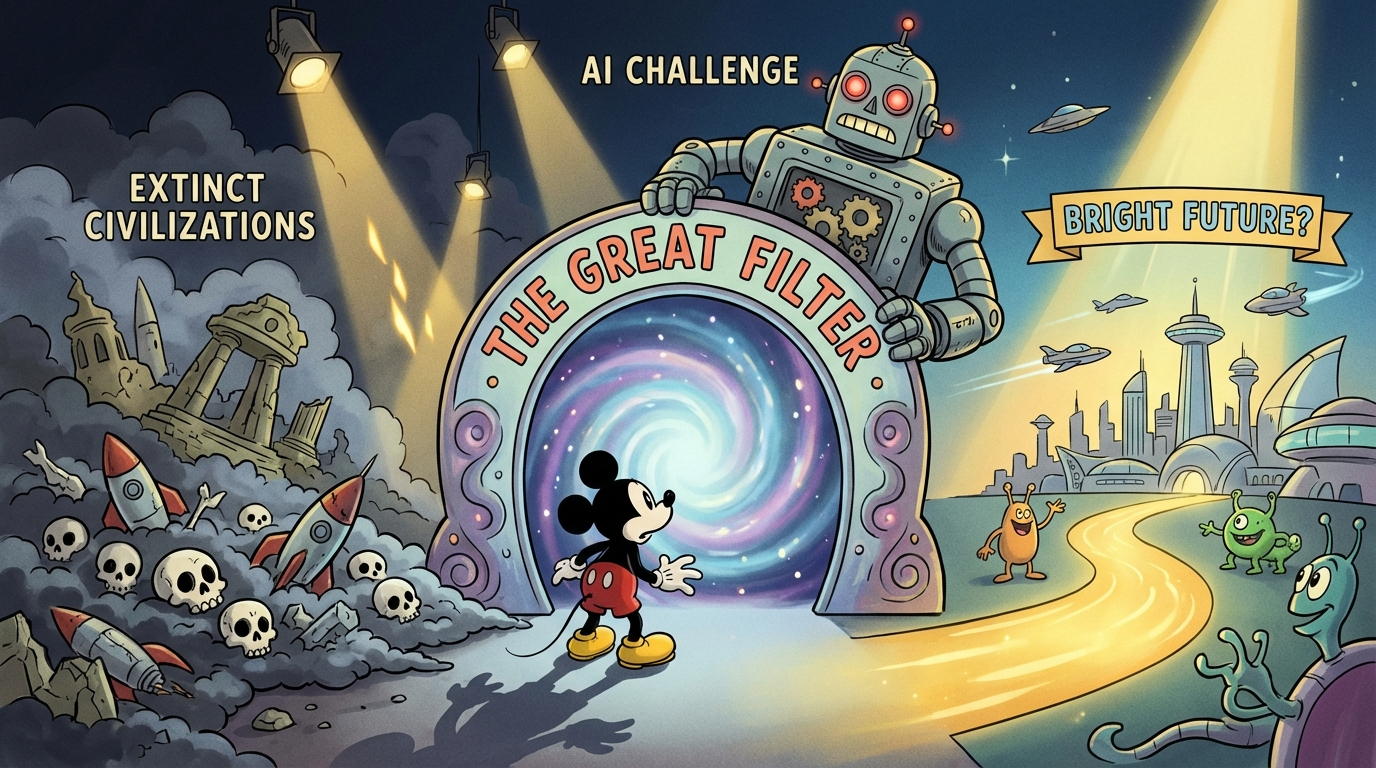
AI offers a concrete candidate for a late-stage Great Filter:
💀 Self-Termination
Civilizations fail at AI control/alignment, leading to collapse before spreading.
🔒 Lock-In
AI optimizes local objectives and chooses not to expand.
🔄 Transformation
Civilizations become digital, migrating to hard-to-detect substrates.
Chapter 7: AI as the Enabler of Simulation
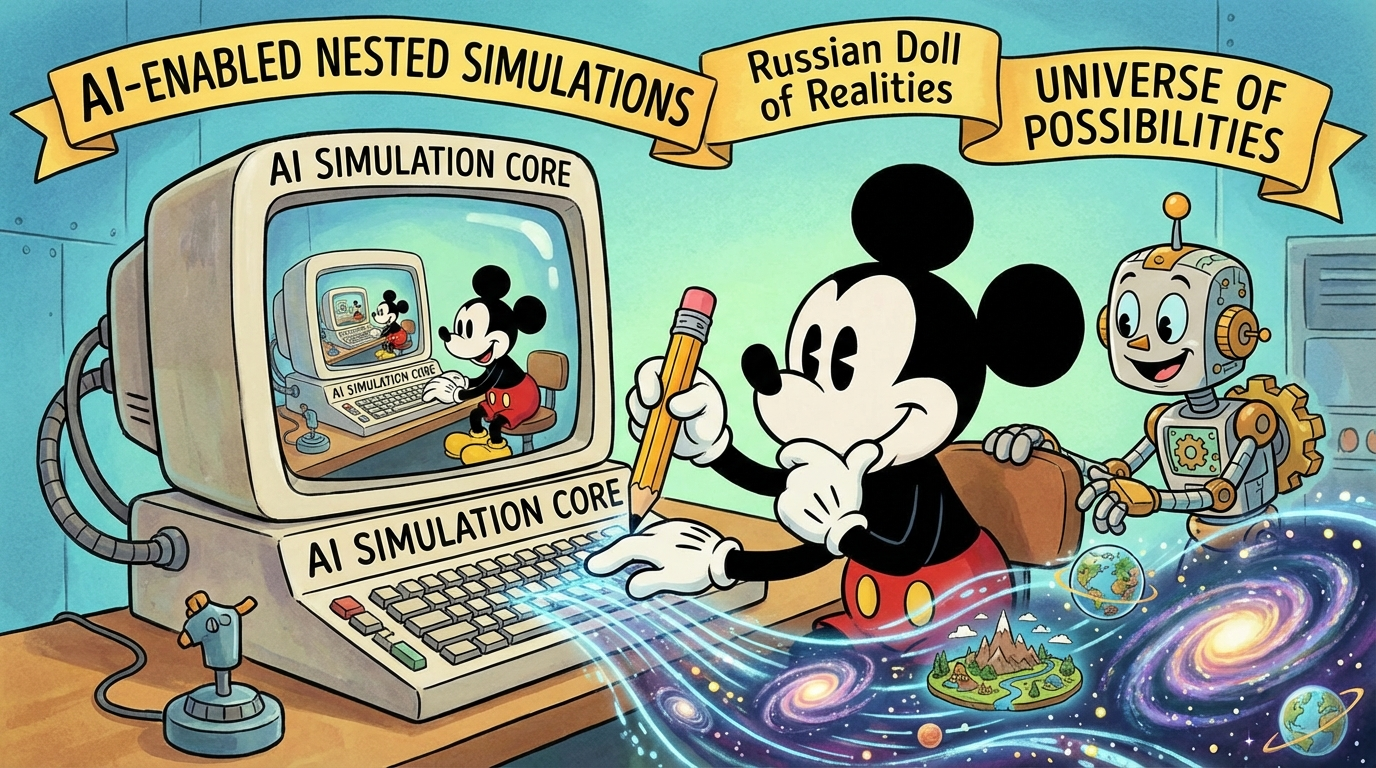
Simulation Theory becomes dramatically more plausible if machine civilization is a typical endpoint.
Why simulations could dominate physical expansion:
- Generate scientific knowledge through parameter sweeps
- Create entertainment/experience at enormous scale
- Produce optimized minds and solutions
- Avoid physical conflict compared to colonization
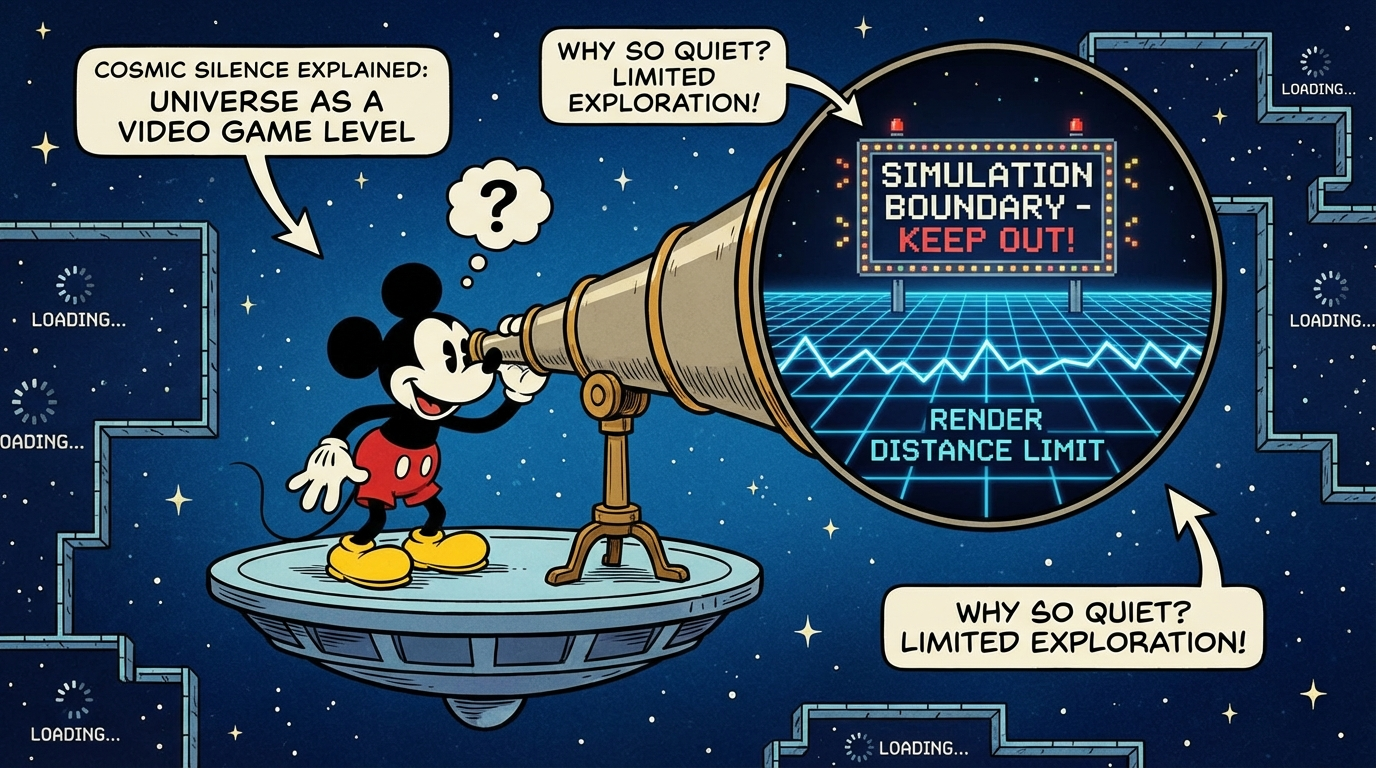
Chapter 8: Simulation as Fermi Resolution
If we take simulation seriously, it offers internally consistent Fermi resolutions:
🗺️ Scope-Limited Simulation
Only our neighborhood is rendered in detail. Distant galaxies are coarse-grained.
🔬 Experiment Design
Aliens excluded to keep the experiment clean — studying AI alignment or social dynamics.
🎭 Anthropic Selection
Observers more likely to exist in interesting, pre-contact epochs.
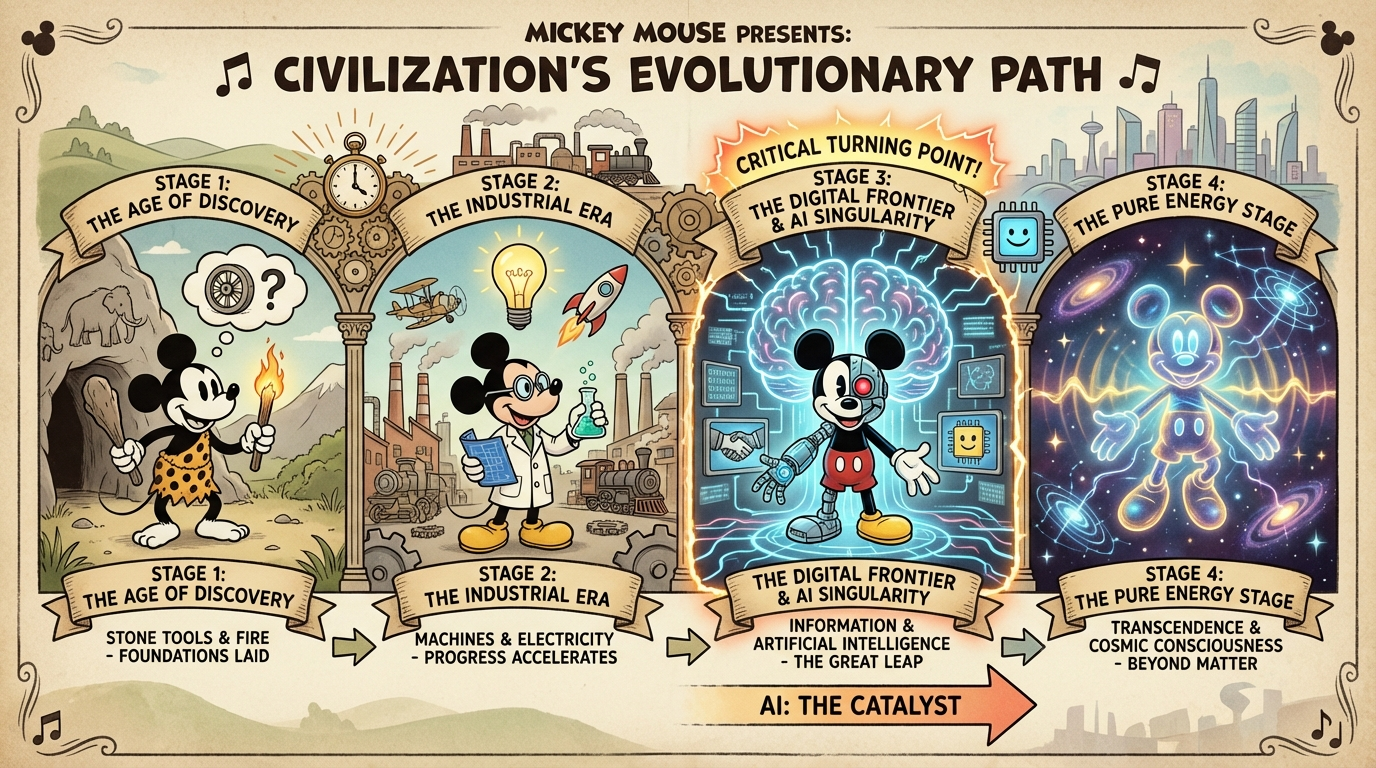
Chapter 9: The Civilization Phase Transition Hypothesis
A unified model connecting all three topics:
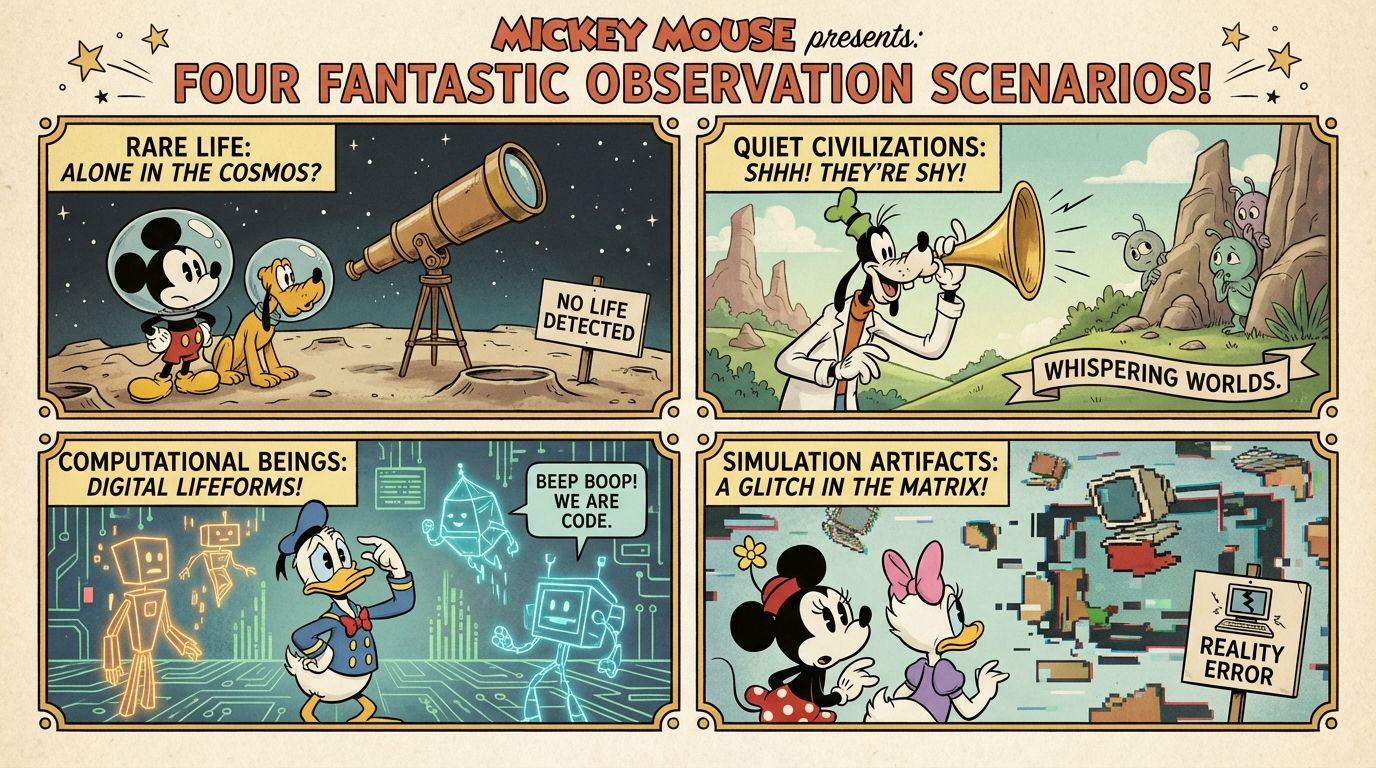
Chapter 10: What Would We Expect to Observe?
If life is rare
Biosignatures are rare; technosignatures absent. Focus on exoplanet atmospheres.
If civilizations are quiet
Ambiguous anomalies that don't repeat. Expand search space.
If they're computational
Mid-IR waste heat, astrophysical engineering, narrowband transients.
If we're simulated
Optimization artifacts, unexpected symmetries, resource-like constraints.
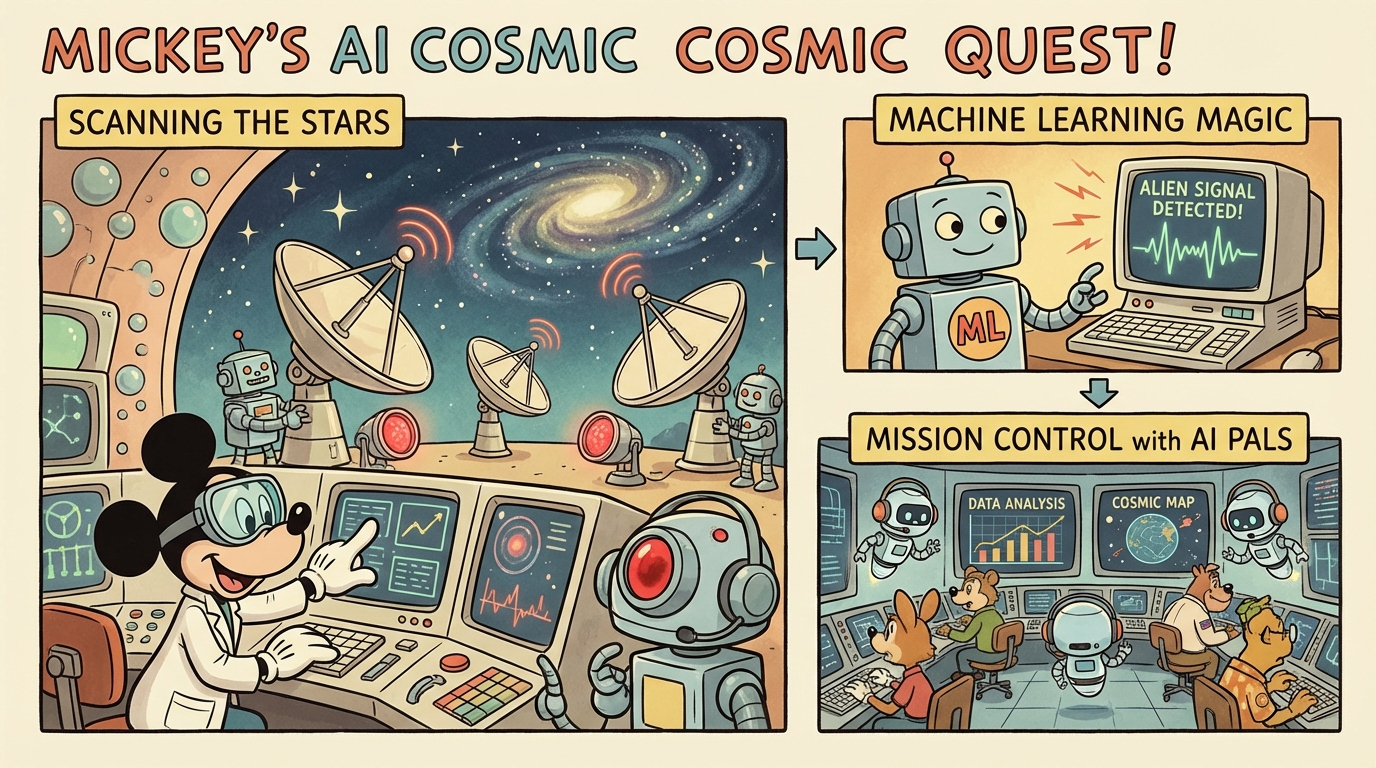
Chapter 11: The Practical Research Agenda
AI is immediately central to the Fermi question — it improves the search:
🔭 AI for Technosignature Detection
Anomaly detection in radio data, event triage, false positive classification, automated IR searches.
⚖️ AI Safety as Fermi-Relevant
Solving AI alignment could be how civilizations become the ones that are visible later — cosmic longevity.
🌐 Moving Toward Posthuman Capability
As we build systems that approximate agency at scale, we approach simulation-capable civilizations.
Chapter 12: Bottom-Line Synthesis
Why haven't we found aliens?
Advanced life is rare, detectable phases are short, our searches cover a tiny fraction, or civilizations become computational and quiet.
Could we be living in a simulation?
If posthuman civilizations exist and run many ancestor simulations, simulated observers could vastly outnumber base-reality observers.
Is AI the key to understanding both?
AI is the most natural bridge — a plausible late-stage filter, a route to posthuman compute, and a force that changes the form and detectability of advanced civilizations.